

Who Gets the Money? Wittenborg Students Take on the Music Industry
Who Gets the Money? Wittenborg Students Take on the Music Industry
Who Gets the Money? Wittenborg Students Take on the Music Industry
https://www.wittenborg.eu/who-gets-money-wittenborg-students-take-music-industry.htm
Amy Abdou Leads Students in a Lively Debate on the Future of Music
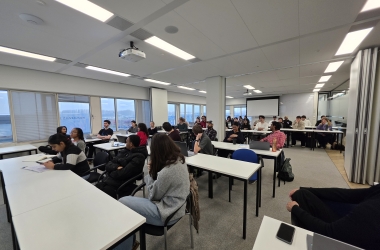
On 11 March, Wittenborg hosted an intercollegiate debate in collaboration with IES Abroad, tackling some of the music industry’s toughest questions: fair pay, streaming platforms, and how musicians can actually make a living today. Led by senior lecturer Amy Abdou, students stepped into the shoes of different stakeholders, from Spotify and TIDAL to record labels, artists, influencers, supporting staff, and consumers.
Abdou kicked things off with a striking example: Radiohead. The band famously released In Rainbows using a pay-what-you-can model, letting fans choose how much to pay. “The average user would pay six dollars, and their return was much greater,” she explained.
“Technology empowers artists,” she added, showing how musicians today can reach audiences directly and explore new ways to share their work. She then asked the students a provocative question, “Do you think the industry needs record labels?” This sparked a lively discussion about whether legacy companies are essential or if streaming and independent channels could take over.
Representing Spotify, students highlighted the platform’s global reach and publicity power. “Spotify provides access to millions of listeners worldwide,” one said. “While it doesn’t pay huge royalties, that exposure can turn into profit.” With more than 650 million active users and a massive ecosystem including podcasts, Spotify was praised for its technology, reach, and accessibility.
From the musicians’ perspective, students explored the tough realities: low income, precarious gigs, and unequal opportunities. Abdou summed it up perfectly: “It is the ones that persist that make it to the end. Actually making a living is another level. The issue with this is that only a select group of people can make it as a musician, and only 80% of signed artists are actually marketed by record labels and make it. So even if you put in the hard work, you can still end up not making any money from it.”
Students suggested a musicians’ union or cooperative with minimum wages, pensions, health insurance, and fair access to gigs to help artists survive.
Record labels, like Sony Music, were defended as essential investors. “Spotify gives publicity, but Sony gives a jump-start,” a student said, showing how labels support long-term career development and financial security.
Influencers on TikTok and Instagram were recognised for helping songs go viral and introducing music to new audiences.
Consumers also had a seat at the table. Students discussed how listeners interact with music today, from free streaming on Spotify and YouTube to paid subscriptions. Many agreed that while fans enjoy ad-free streaming, ethical consumption, paying fairly to support artists, is complicated. Students debated whether fans would accept higher subscription costs to ensure fair pay, highlighting the tension between accessibility and sustainability in music.
Finally, supporting staff, from stagehands to lighting technicians and event organisers, were acknowledged as vital yet often undervalued. Low pay, no pensions, and insecure work were flagged as serious issues, and students noted that fair compensation could even affect concert ticket prices.
Abdou closed with a reflection on the bigger picture: “I am curious what the future of the music industry will look like. We know that there are fewer artists supporting roles. There are fewer people pursuing music and only certain people make it to the end.”
After the debate, students had the chance to enjoy lunch together and continue the conversation.
WUP 30/03/2026
by Erene Roux
©WUAS Press
Tags
#Internationalisation
#internationalstudent
#SDG9: Industry, Innovation and Infrastructure
#Ethics
#Diversity
588 words