

Wittenborg Researchers Join First EPILAB Transnational Project Meeting in Rome
Wittenborg Researchers Join First EPILAB Transnational Project Meeting in Rome
New Erasmus+ Project Explores How Students Can Navigate AI, Misinformation and Uncertainty
As artificial intelligence becomes an everyday part of learning, a new European initiative is asking a crucial question: how do students know what information to trust?
That challenge is at the heart of EPILAB (Epistemic & Civic Resilience Labs in AI-mediated Universities), an Erasmus+ project that aims to strengthen students' ability to evaluate evidence, question sources and make informed decisions in increasingly complex digital environments.
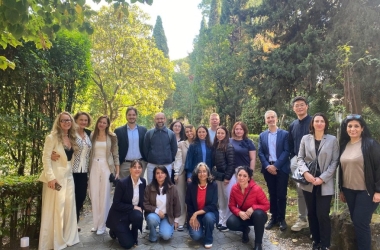
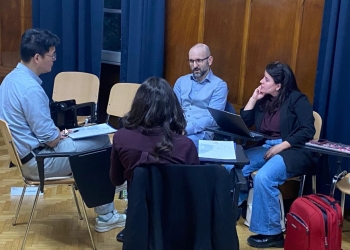
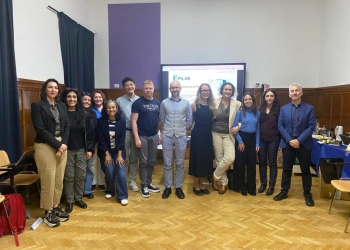
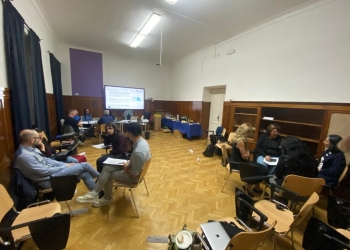
Researchers Jian Liu and Hind Albasry represented Wittenborg University of Applied Sciences at the first EPILAB Transnational Project Meeting in Rome, where representatives from six European partner organisations aligned plans for the next 30 months.
"Using AI is not itself the central educational challenge," said Liu. "The more important question is how students evaluate evidence, assess the reliability of information and make informed judgements when information may be incomplete, conflicting or AI-generated."
Coordinated by Link Campus University in Italy, EPILAB brings together higher education institutions and organisations from six countries to develop practical tools that help students navigate misinformation, bias, uncertainty and AI-generated content.
The project will create a new assessment tool, known as ETM-lite, alongside a series of classroom-based Epistemic Labs designed to help students analyse information critically and engage constructively with different viewpoints.
Wittenborg plays a leading role in Work Package 4: Facilitator Training, which focuses on preparing educators to deliver EPILAB's classroom-based learning activities across participating institutions. The business school is responsible for developing training resources that will help ensure the methodology can be implemented effectively across different higher education settings.
"The meeting helped us move from the project proposal to practical implementation," Liu said. "It was valuable to see how the different parts of the project connect and how facilitator training will support the delivery of the Labs in practice."
Over the course of the project, partners will develop 12 Epistemic Lab scenarios covering topics such as misinformation, deepfakes, source credibility, bias and uncertainty. The initiative will also train 48 facilitators, helping institutions build expertise that can continue beyond the project's lifetime.
One theme that emerged repeatedly during the Rome discussions was that helping students thrive in an AI-driven world requires more than technical skills.
"Students need to be able to question information, evaluate evidence and explain their reasoning," Liu said. "Those capabilities are becoming increasingly important across higher education and beyond."
Running until February 2029, EPILAB aims to help higher education institutions prepare students for a world where information is abundant, AI is increasingly influential, and critical thinking has never been more important.
440 words