

International Academic Advisory Panel Shapes Wittenborg’s Direction for 2026
International Academic Advisory Panel Shapes Wittenborg’s Direction for 2026
International Academic Advisory Panel Shapes Wittenborg’s Direction for 2026
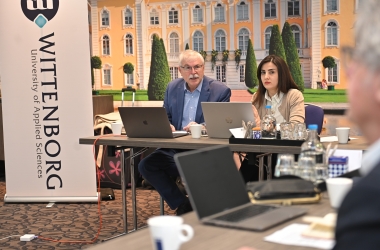
IAAP Meeting Reviews Progress and Sets Strategic Priorities for 2026
On 7 February, Wittenborg held its annual International Academic Advisory Panel (IAAP) meeting in a hybrid format, with thirteen members joining from Apeldoorn and online. The session included IAAP members Ben Q. Honyenuga, Nuran Acur, Erik Devos, Leo Paul Dana, Peter van Zürcher, Marina Dabic, Petra de Weerd-Nederhof, Ed Vosselman, Ed Peelen, and Jasmina Selimovic, along with Wittenborg leadership: Ron Tuninga, Peter Birdsall, Aydan Holtrigter, and Kriszta Kaspers.
One of the main topics was the AACSB (Association to Advance Collegiate Schools of Business) peer review visit in 2025. The panel saw this as an important milestone for Wittenborg and discussed high-level priorities for the institute. These included making sure strategy is clearly linked to action, improving the monitoring of student progress, and growing research capacity and impact.
Research was another key focus. From 2021 to 2025, Wittenborg coordinated or participated in ten funded projects, primarily within Erasmus+ and capacity-building frameworks. Holtrigter, the Head of Research Partnerships at Wittenborg, presented an overview of these activities, and IAAP members offered guidance on strengthening applied, practice-oriented business research.
They suggested linking funded projects more closely with publications, finding ways to share research in practical outlets, and working more closely with industry and European partners. Members also highlighted the importance of student and staff mobility, international research networks, and academic events such as workshops and seminars in supporting research impact and visibility.
Kaspers, Head of Education Development and Quality Management, said:
“The IAAP’s advice is really valuable. It helps us focus on what matters most. Connecting strategy to action, supporting applied research, and building stronger international links are key priorities for Wittenborg.”
The panel also reviewed strengths identified during the AACSB peer review. These included a diverse and international student body and staff, strong engagement from students, and clear links with the local and regional community. Areas for further improvement included making strategy more actionable, tracking student progress in more detail, and increasing research output.
Preparations for upcoming NVAO and FIBAA programme accreditations were also discussed. These remain important for maintaining degree-awarding authority and programme continuity.
The meeting formally acknowledged the departure of Weerd-Nederhof from the IAAP after five years, recognising her contributions and dedication.
A follow-up online IAAP session focusing on education strategy and AI is planned for later this year.
WUP 25/02/2026
by Erene Roux
©WUAS Press
Tags
#SDG4: Quality Education
#Internationalisation
#Diversity
#Ethics
#research
#accreditedbusinessschool
#AACSB
415 words