

Why Talent Development Is Essential in Today’s Organisations: Insights from Imane Jelloul
Why Talent Development Is Essential in Today’s Organisations: Insights from Imane Jelloul
Why Talent Development Is Essential in Today’s Organisations: Insights from Imane Jelloul
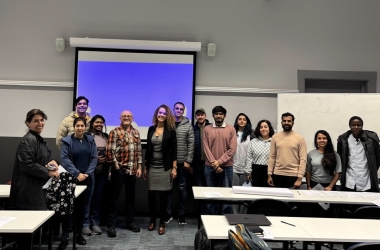
MBA Students Explore Leadership and Talent Development in Apeldoorn
Wittenborg recently hosted Imane Jelloul, Head of HR & Communication at ArcelorMittal Europe Flat Products, for a guest lecture on talent development and leadership in global organisations.
Drawing on over 20 years of experience in the steel industry and international HR, Imane shared her journey from leading operations on industrial sites to heading strategic HR initiatives across global companies. “I am an HR and industrial leader in the steel industry, organisational transformation, and leadership development across global and multicultural environments,” she explained. She also highlighted her contributions to major projects, including the launch of Morocco’s first modern steelmaking plant.
Throughout the session, Imane emphasised that leadership starts with self-leadership. “Before leading teams, projects, or organisations, we must learn to lead ourselves with clarity, purpose, and integrity,” she said. She encouraged students to see leadership as a mindset rather than a title. “In a global and changing world, your greatest strengths will be your humanity, your ability to connect with others, and your commitment to continuous learning.”
Imane explored why talent development is crucial for organisations today. “No transformation—digital, organisational, or industrial—can succeed without people who are prepared and empowered,” she said.
Drawing on her experience in multinational environments, she shared insights on building leadership pipelines, strengthening succession planning, and fostering resilient and inclusive cultures. She illustrated these points with real-world industrial examples, including organisational design, cultural transformation initiatives, and coaching programmes.
The lecture was very interactive. Students asked questions about career transitions, leadership readiness, and how smaller organisations can develop talent without significant financial investment. “Even in smaller companies, you can implement effective talent development approaches based on coaching, peer learning, and structured feedback,” Imane advised. Faculty feedback highlighted how much they had learned about talent development practices in the steel industry, reinforcing the value of connecting academic learning with practical experience.
In closing, Imane offered advice for aspiring leaders: “Cultivate self-leadership first. Build strong interpersonal and communication skills. Seek diverse experiences early. Stay open to continuous learning. Look for mentors and role models.” She reminded students that leadership is not a title but a way of thinking and acting. “It is always a privilege to connect academic perspectives with real-life experience, and I am grateful for the opportunity to contribute to the development of the next generation of leaders.”
WUP 07/01/2025
by Erene Roux
©WUAS Press
Tags
#SDG8: Decent Work and Economic Growth
#Internationalisation
#internationalstudent
#Diversity
#highered
#apeldoorn
423 words